Losing valet keys during a busy shift slows down car returns and upsets guests. When many cars pull up at once, paper tags make it hard to tell which fob goes to which car.
Good valet key control and a simple key tracking system help your crew find fobs fast. Smart valet key management stops lost keys and keeps the front drive moving.
Let's get started.
Why Valet Keys Vanish on Busy Shifts
Most key problems happen when a big rush hits and staff rush to move cars. Without a set plan, tiny slips turn into big problems.
Here are three reasons keys get lost when shifts get busy:
- The Hand-Off Gap: Workers often leave keys on car dashboards or drop them into their own pockets. If a runner gets called to help another car, that loose key gets forgotten instead of going straight to the lockbox.
- Torn Paper Tags: Old paper tags get wet, rip off rings, and drop to the floor. Messy handwriting makes numbers hard to read, which leaves runners guessing which car matches which fob.
- The Open Key Box: When any runner can reach into the box, chaos takes over. Three people grab keys at once and leave zero proof of who took what.
5 Steps to Keep Valet Keys Tracked
Keeping track of car keys takes a clear plan that your whole crew follows. Use these five simple steps to protect guest fobs and keep your front drive moving without mix-ups.
Step 1: Tag Each Key as Soon as the Car Arrives
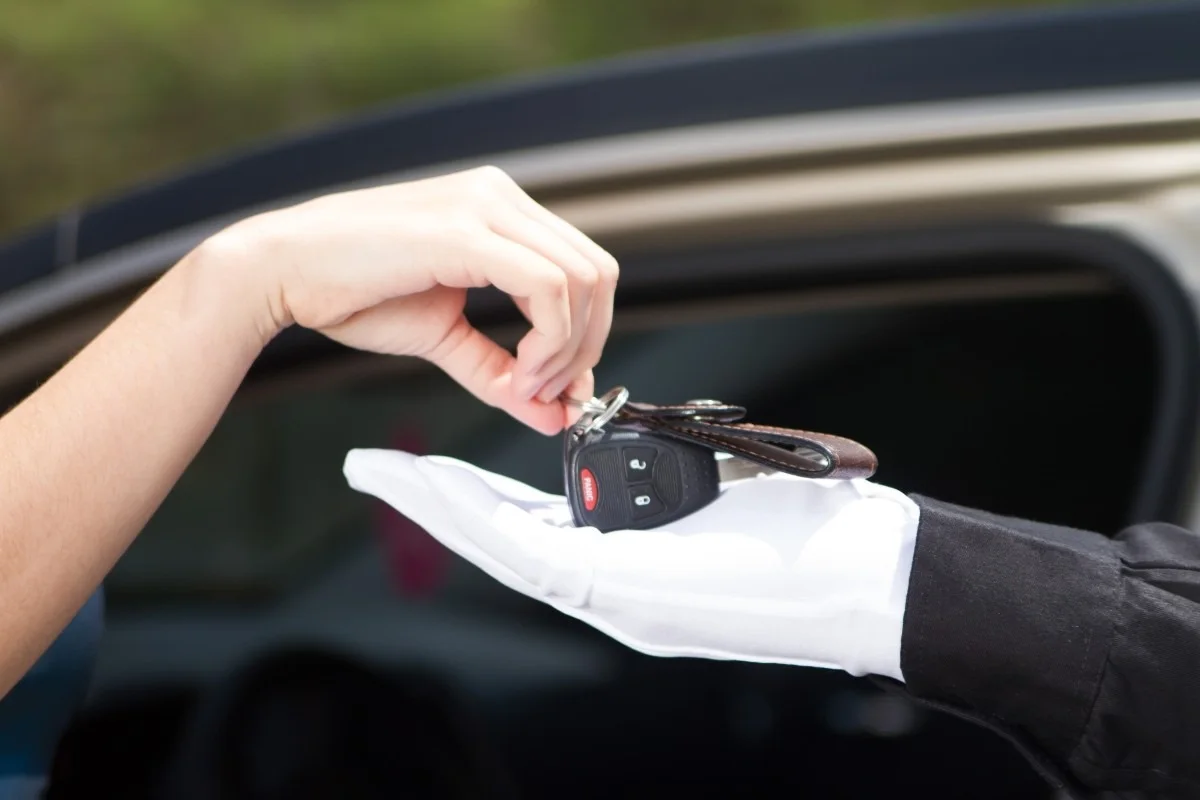
Do not let the driver step away until the tag is clipped tightly to the key ring. Setting loose fobs on the counter causes fast mix-ups before the car even moves, so link the tag number straight to the guest record right away.
Attach the tag to the key ring before the guest enters the lobby and match the tag number to the car's details and phone record.
Step 2: Set One Safe Place for Every Key
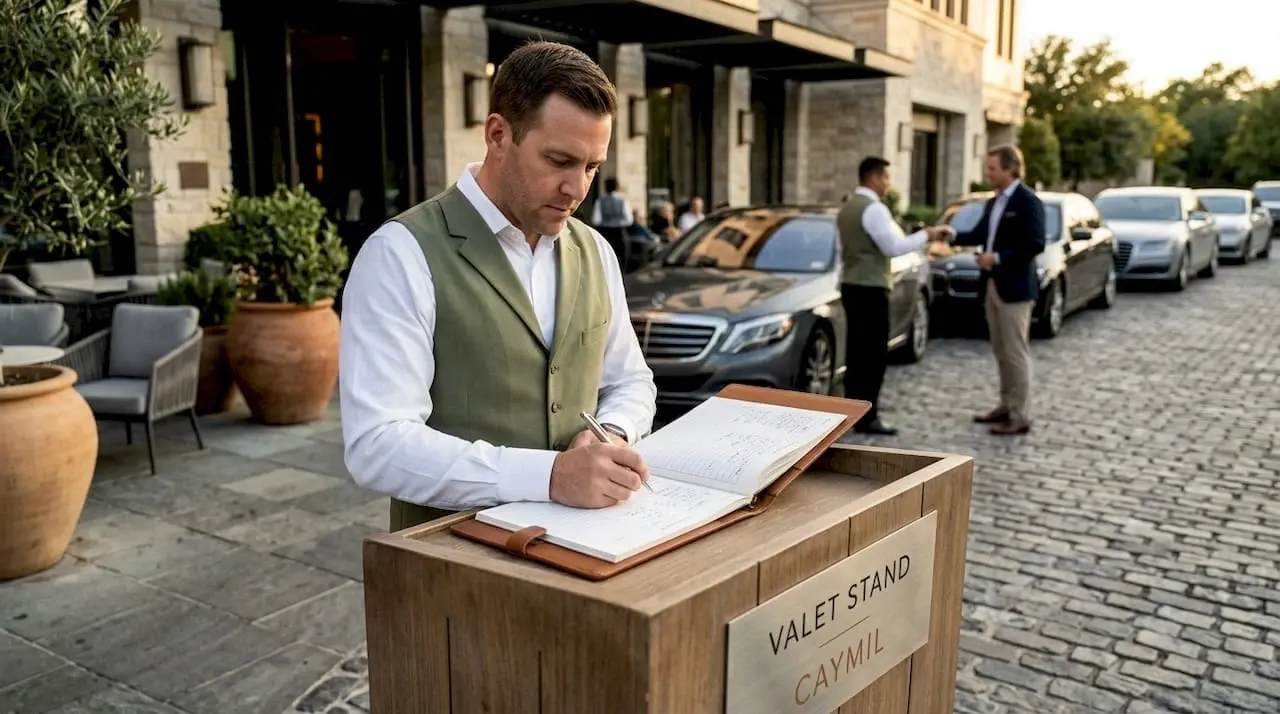
Every single key needs an exact spot to rest while the car sits parked. A sturdy podium from your valet parking equipment checklist keeps the board neat and stops workers from tossing fobs into a pile. A clean setup lets runners find what they need in seconds.
- Use numbered hooks that match your back lot rows and zones.
- Keep the key box shut and locked between car runs.
- Tell workers to keep loose keys out of their pants pockets.
Step 3: Put One Person in Charge of the Key Box
When every worker reaches into the box at once, fobs drop, and hooks get messy. Name one shift lead to guard the podium during your busiest hours. This simple rule stops the scramble of hands and makes one person responsible for the keys.
- Pick one lead worker to guard the key box during peak rush times and let runners call out numbers while only the lead grabs the keys.
- Stop multiple workers from reaching into the small box together.
Step 4: Track Who Holds the Key at Every Moment
You must know who holds a key every second it leaves the cabinet. Writing down each hand-off keeps your team honest and stops fobs from getting lost on the curb. Moving to a modern key management system makes this step fast and easy on busy nights.
Streamline valet control by logging runner names, hook numbers, and checkout times, using phone scans, and setting quick alerts for keys kept out too long.
Step 5: Run Fast Key Audits During the Shift
Do not wait for an angry guest at the front door to find out a key is missing. Taking just two minutes to scan your board catches small slips before they turn into long delays. Quick checks keep your team ahead of problems all night.
- Take two minutes at the top of every hour to check the hook rows.
- Match each empty hook to cars that are on their way to the curb.
- Find missing keys early, before the guest comes outside to ask for the car.