A guest hands over the keys to a $90,000 vehicle. If it comes back scratched, or doesn't come back at all, the property is the first place they look for answers.
Valet parking liability insurance exists for exactly that moment. It covers the gap between "we take great care of guest vehicles" and the legal and financial reality when something goes wrong. This guide covers the core coverage types, what typically goes into a valet contract, and the risk management practices that reduce how often claims happen in the first place.
This is general information, not legal or insurance advice. Coverage requirements vary by state and property type, so confirm specifics with a licensed insurance broker or attorney before finalizing a policy.
What is Valet Parking Liability Insurance?
Valet parking liability insurance is coverage that protects a property or valet operator against claims arising from damage, theft, or loss involving a guest's vehicle while it is in the valet's care, custody, or control.
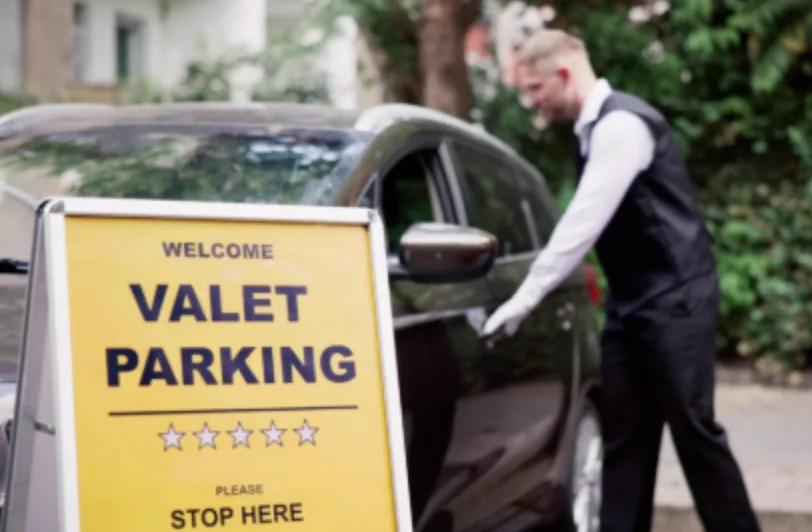
It typically sits alongside a property's general liability policy but addresses a specific risk that standard commercial coverage often excludes: physical damage to vehicles that are not owned by the business.
Garagekeepers Liability Coverage Explained
Garagekeepers liability is the core coverage type for any operation that parks, stores, or moves customer vehicles. It responds when a guest's car is damaged, stolen, or destroyed while in the valet's custody, regardless of whether the damage happened during parking, retrieval, or while the vehicle sat in the lot.
There are two common structures:
- Legal liability form - Pays out only when the valet operator is found legally at fault for the damage.
- Direct primary form - Pays regardless of fault, which is broader and often preferred by properties that want fewer disputes over responsibility.
Garagekeepers coverage is usually written with a per-vehicle limit and an aggregate limit, so it is worth confirming both numbers match the value of vehicles typically parked at your property.
Types of Valet Insurance Coverage to Carry
A complete valet insurance coverage package usually includes more than garagekeepers liability alone.
- General liability - Covers third-party bodily injury or property damage not related to the vehicle itself, such as a guest tripping near the valet stand.
- Garagekeepers liability - Covers physical damage to guest vehicles in the valet's care.
- Workers' compensation - Covers valet attendants injured on the job, which is required in most regions for any business with employees.
- Commercial auto liability - Covers the valet while physically driving a guest's vehicle, since garagekeepers liability alone does not always cover injuries caused during an accident.
- Umbrella or excess liability - Adds coverage above the limits of the underlying policies, which matters for properties parking higher-value vehicles.
Outsourced valet companies typically carry their own package and add the property as an additional insured. In-house teams need the property's own policy to cover all of the above directly.
Valet Operator Liability: Who is Responsible
Valet operator liability depends heavily on how the relationship between the property and the valet team is structured.
When valet is outsourced, the contracted company is usually the primary party liable for vehicle damage, since they employ and supervise the attendants. The property can still face claims if a guest argues the venue was negligent in selecting or overseeing that vendor.
When valet is in-house, liability sits with the property directly, since the attendants are its own employees.
This is why insurance requirements and indemnification language need to match the actual staffing model in use. A contract written for an outsourced arrangement will not protect a property running an in-house team, and the reverse is also true.
Valet Contract Clauses That Protect Your Operation
Whether you're the property or the valet company, certain valet contract clauses consistently reduce disputes and clarify who pays when something happens.
| Clause | What It Covers |
|---|---|
| Compensation Clause | Defines which party absorbs the cost of a claim and under what conditions. |
| Insurance Requirements Clause | Specifies minimum coverage limits and requires proof of insurance before service begins. |
| Additional Insured Clause | Names the property as an additional insured on the valet company's policy, extending some protection to the venue. |
| Limitation of Liability Clause | Caps the maximum payout for certain types of claims, often tied to the vehicle's value or a fixed dollar amount. |
| Condition Documentation Requirement | Requires photo or written documentation of vehicle condition at check-in, which becomes critical evidence if a damage dispute arises later. |
None of these clauses eliminate risk on their own. They exist to make sure that when a claim happens, the responsibility and the payout process are already defined instead of argued after the fact. If you're negotiating these terms from the valet company's side, our guide on how to win valet contracts covers how to position your insurance and liability terms to close deals faster.